Step into a colonial house interior and you’re immediately wrapped in centuries of quiet dignity — wide plank floors that creak just so, a grand staircase with turned balusters, and the soft glow of a chandelier over a formal dining table. You’ll love how a colonial house interior balances symmetry with warmth, using rich woods, muted wall colors, and furniture that feels both substantial and inviting. It’s like walking into an American heritage painting, but one where you’re welcome to sit down and stay awhile.
From elegant foyers with sweeping staircases to living rooms filled with blue couches and fireplace mantels, these colonial house interior inspirations honor tradition without feeling stuffy. Picture hallways that lead you through the home with purpose, kitchens with abundant counter space, and formal dining rooms where family gatherings echo with laughter. Let’s wander through these timeless spaces — each one a love letter to craftsmanship, symmetry, and the gentle patina of age.
1. Abundant Comfort – Living Room Rich with Furniture
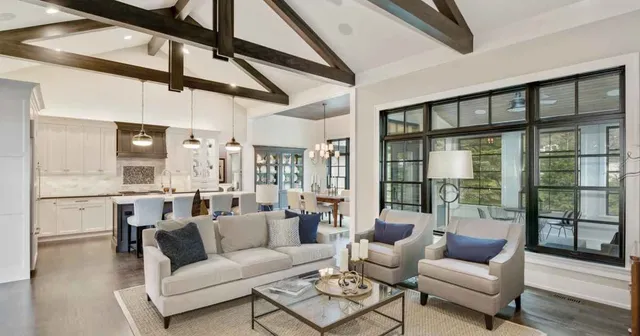
Unfurl this living room where lots of furniture gathers in conversational groupings, each piece worn-in and welcoming. This colonial house interior embraces abundance — wingback chairs, a deep sofa, side tables holding lamps. You’ll love how the room feels designed for actual living, not just for show.
A colonial house interior never fears furniture. The rooms were built for large families and entertaining, so fill them with pieces that invite sitting, reading, and lingering. The wood tones should echo the flooring, creating a harmonious flow from one seating area to the next.
2. Beige & Wood – Elegance in Neutral Tones
Notice the restraint of this elegant living room where wooden furniture stands against soft beige walls. This colonial house interior palette keeps things calm and classic, allowing the grain of the wood to be the main event. You’ll appreciate how the neutral backdrop makes the room feel larger and more serene.
Beige and cream are foundational colors in a colonial house interior. They reflect the era’s love of natural light and understated luxury. Pair these walls with dark mahogany or cherry furniture, and you’ve created a look that’s both formal and deeply comfortable.
3. Blue Anchors – Couches and Pillows in Deep Navy
Sink into blue couches adorned with patterned pillows, a bold choice against traditional wood trim. This colonial house interior introduces color without abandoning heritage — navy blue was a prized dye in colonial times. You’ll love how the blue contrasts with warm wood floors and white wainscoting.
Blue is a historic color in colonial house interior design. Use it on upholstery, curtains, or an accent wall. Pair with brass or pewter hardware, and the room feels both period-appropriate and refreshingly current.
4. Second Gathering – Another Bounty of Furniture
Observe the pattern — another living room filled with lots of furniture, proving that colonial house interior rooms were made for company. The arrangement encourages conversation, with sofas facing chairs and plenty of surface space for drinks and books. You’ll feel the invitation to sit and stay.
When furnishing a colonial house interior, think in terms of symmetry and balance. Pair matching armchairs across a coffee table, flank a fireplace with identical bookshelves. The repetition creates a rhythm that soothes the eye.
5. Grand Passage – Hallway with Stairs, Chandelier, and Rugs
Walk this hallway where stairs ascend beneath a glowing chandelier, runners softening each step. This colonial house interior hallway is an experience, not just a thoroughfare. You’ll love how the wooden balusters and newel post anchor the space, promising more rooms above.
Hallways in a colonial house interior deserve as much attention as any room. Add a runner in a traditional pattern, hang a chandelier or pendant light, and line the walls with period-inspired prints. The journey becomes part of the destination.
6. First Impression – Foyer with Chandelier and Sweeping Staircase
Look up in awe at an elegant foyer where a chandelier hangs above a staircase that leads gracefully to the second floor. This colonial house interior entrance makes a statement the moment you step inside. You’ll appreciate how the symmetry of the stairs and the glow of the fixture set the tone for the whole home.
The foyer is the handshake of a colonial house interior. Invest in a quality chandelier, a runner for the stairs, and a console table with a mirror above. Guests should feel welcomed and a little awed — like entering a historic home that’s also a family sanctuary.
7. Revival Charm – American Colonial Living Room
Study this revival space — an American Colonial living room that honors the past while feeling livable. This colonial house interior blends antique reproductions with comfortable upholstery, proving that history doesn’t have to be brittle. You’ll love the mix of dark wood, floral patterns, and a fireplace as the focal point.
Colonial Revival style, popular in the early 20th century, offers a softer take on colonial house interior design. Look for spindle-backed chairs, Windsor seating, and muted wallpaper with tiny prints. It’s history made cozy.
8. Formal Feasts – Dining Room with Table, Chairs, and Chandelier
Pull up a chair to a long dining table beneath an elegant chandelier. This colonial house interior dining room is built for Thanksgiving dinners, Sunday roasts, and candlelit conversations. You’ll notice how the chandelier’s light dances off the polished wood, making every meal feel like an occasion.
A formal dining room is essential in a colonial house interior. Choose a extending table to accommodate guests, upholstered side chairs for comfort, and a sideboard for serving. The chandelier should hang about 30 inches above the table — close enough to intimate, high enough to be grand.
9. Gallery Stairwell – Pictures Climbing the Wall
Climb with your eyes as framed pictures ascend the staircase wall, a small table resting on the landing below. This colonial house interior trick turns a functional passage into a personal gallery. You’ll love how the artwork tells a family story, each frame a chapter.
Staircase walls are ideal for colonial house interior art displays. Use consistent frames (black or gold) and hang them following the stair angle. A small table on the landing can hold a vase or a collection of antique books, adding a still-life moment to the ascent.
10. Colonial Powder Room – White Toilet Beside Wooden Cabinet
Step into a small bath where a white toilet sits next to a warm wooden cabinet, proving that colonial house interior charm extends even to powder rooms. You’ll appreciate how the wood tones echo the rest of the home, creating continuity even in small spaces.
Don’t neglect bathrooms in your colonial house interior vision. Use pedestal sinks, brass fixtures, and framed mirrors. Add a small print on the wall and a ceramic soap dish. Even the smallest room can feel period-appropriate.
11. Light & Arch – Foyer with Wood Floors and Arched Windows
Let the light pour in through arched windows in this large foyer with gleaming wooden floors. This colonial house interior entrance feels both grand and welcoming, the arch softening the geometry. You’ll love how the morning sun traces the curve of the glass.
Arched windows and doorways are signatures of colonial house interior architecture. They echo the craftsmanship of the era and add a sense of elegance. Keep window treatments minimal — simple drapes or shutters — to let the arch shine.
12. Another Abundance – More Furniture, More Warmth
Embrace the repetition — a living room filled with furniture, each piece placed with intention. This colonial house interior philosophy believes rooms are for living, not for empty space. You’ll notice how the furniture groupings create zones within one large room.
When arranging a colonial house interior living room, create distinct areas: a conversation zone near the fireplace, a reading nook by the window, a game table in the corner. The room should feel layered, like a well-loved novel.
13. Blue Dining – Formal Room with Blue Walls and Wood Trim
Dine in depth with a formal dining room featuring deep blue walls and rich wood trim. This colonial house interior choice adds drama without sacrificing tradition. You’ll love how the blue makes the white china pop and the candlelight feel warmer.
Dark wall colors work beautifully in colonial house interior dining rooms because they recede, making the room feel intimate. Use oil paintings or gilt-framed mirrors to catch the light, and keep the ceiling white for contrast.
14. Hearth and Home – Living Room Anchored by a Fireplace
Gather around the fire in a living room filled with furniture facing a central fireplace. This colonial house interior layout is as old as America itself — the hearth as the heart. You’ll feel the pull of the flames, even in a photograph.
The fireplace is non-negotiable in a colonial house interior. Even if not functional, dress the mantel with candles, a mirror, and seasonal garlands. Arrange seating to face the fire, and you’ve created the coziest room in the house.
15. Ready and Waiting – A Clean, Inviting Hallway
Walk this clean hallway — spotless floors, a runner in place, walls ready for pictures. This colonial house interior passage is a promise of what lies beyond. You’ll appreciate how the simplicity lets the architecture speak: the baseboards, the door frames, the gentle curve of the ceiling.
A hallway in a colonial house interior should feel like a breath between rooms. Keep it clutter-free, use a runner to soften footsteps, and add a small console table with a lamp. It’s a corridor, yes, but also a moment of pause.
16. Colonial Cookery – Kitchen with Abundant Counter Space
Prep and gather in a kitchen filled with lots of counter space, a modern nod to colonial practicality. This colonial house interior updates the hearth kitchen for today’s cook. You’ll love the mix of open shelving, shaker cabinets, and a farmhouse sink.
Colonial kitchens were workhorses, and your colonial house interior kitchen should be too. Prioritize counter space, storage, and natural light. Add butcher block, a pot rack, and a big table for casual meals. It’s the hardest-working room in the house, and it should show it.
17. Second Passage – Another Ready Hallway
Notice the consistency — another clean hallway, ready for use. This colonial house interior values uncluttered circulation, allowing the architectural details to shine. You’ll see how the floorboards run long, the walls are free of unnecessary decor, and the light falls softly.
Resist the urge to over-decorate hallways in a colonial house interior. A runner, a simple table, and perhaps one large mirror are enough. Let the space breathe, and your home will feel larger and more serene.
18. Stairs as Art – Living Room with Furniture and a Visible Staircase
Let the staircase be seen in this living room filled with furniture, the stairs rising in the background like a sculpture. This colonial house interior layout celebrates vertical circulation as part of the decor. You’ll love how the balusters add rhythm and the newel post anchors the corner.
In open-plan colonial house interior spaces, the staircase becomes a focal point. Keep it visible, paint the risers white, and add a runner in a coordinating pattern. The stairs become not just functional but beautiful.
19. Third Hallway – Still Clean, Still Ready
Embrace the repetition — a third clean hallway, a theme in this colonial house interior collection. You’ll start to see that the magic of colonial design is often in the quiet spaces between rooms. The hallway isn’t an afterthought; it’s a transition, a breath, a pause.
Study the hallways in historic colonial house interior photos. They’re rarely wide, but they’re always intentional. Use wall sconces for gentle lighting, and keep the color palette consistent with adjacent rooms. The journey matters as much as the destination.
20. Final Welcome – Foyer with Wood Flooring and Chandelier
Step into elegance one last time — a foyer where wood flooring gleams beneath a statement chandelier. This colonial house interior entrance summarizes everything we love about the style: symmetry, warmth, and a sense of occasion. You’ll feel welcomed and impressed in equal measure.
The foyer is your colonial house interior handshake. Make it count with a chandelier that suits the scale of the space, a rug that defines the entry, and a console table with a vase of fresh flowers. Guests should know, the moment they cross the threshold, that they’re somewhere special.
🕰️ Heritage Weaver’s Almanac: 6 Fresh Blueprints for Colonial House Interior
- 📐 The Symmetry Principle: Balance every window with a matching one, every chair with a partner. A colonial house interior thrives on pairs — twin sconces flanking a fireplace, matching armchairs on either side of a sofa. This visual equilibrium calms the eye, like a reflection in still water.
- 🪵 The Wood Continuum: Carry the same wood tone from flooring to furniture to trim. In a colonial house interior, consistent wood (mahogany, cherry, or walnut) creates flow and unity. Use area rugs to define zones without breaking the wooden thread.
- 🕯️ The Layered Light: Use three sources of light in every room: overhead (chandelier or pendant), task (lamps on tables), and accent (candles or sconces). This colonial house interior strategy creates depth and warmth, mimicking the glow of pre-electric homes.
- 🧺 The Woven Texture: Introduce natural fibers through rugs, baskets, and upholstery. A colonial house interior benefits from wool, linen, and cotton — materials that soften the hard edges of wood and plaster. Think hooked rugs, linen drapes, and basket storage.
- 🎨 The Patriotic Palette: Draw from historic colors — navy blue, burgundy, forest green, cream, and ochre. These hues, used on walls or upholstery, anchor a colonial house interior in tradition while allowing flexibility. A blue dining room, a green study, a burgundy library — each room gets its own mood.
- 📖 The Mantel Story: Style your fireplace mantel with a large mirror or painting, then layer with candlesticks, a clock, and seasonal greenery. The mantel is the focal point of any colonial house interior living room. Change the accessories with the seasons, but keep the anchor piece constant.
Frequently Asked Questions
Q: How do I make a colonial house interior feel less formal and more livable?
Ans: Soften the formality with comfortable upholstery, layered textiles, and family photos. A colonial house interior can be both elegant and cozy — use slipcovered sofas, add throw blankets, and mix in a few casual pieces like a woven rocker. The key is balance: dark wood with light linen, polished brass with worn leather. Let the room breathe, and it will welcome you.
Q: What flooring works best in a colonial house interior?
Ans: Wide-plank hardwood in oak, pine, or maple is the gold standard for colonial house interior floors. Look for planks at least five inches wide, with a matte or low-sheen finish. In kitchens and bathrooms, consider stone or period-appropriate tile (black and white checkerboard, for example). Area rugs in wool or cotton soften the wood and add pattern.
Q: Can I mix modern furniture with a colonial house interior?
Ans: Absolutely, and the contrast can be striking. A sleek modern sofa in a neutral color can live happily alongside a antique grandfather clock. The key is respecting the bones of the colonial house interior — keep the architecture traditional, but let your furniture be eclectic. A Lucite table, a mid-century lamp, or abstract art can all feel fresh against colonial paneling.
Q: What are essential colors for a colonial house interior?
Ans: Historic colors include Williamsburg blue, tavern gold, barn red, sage green, and linen white. For a colonial house interior, use these on walls, trim, or accent pieces. Keep ceilings lighter (cream or white) to reflect light. Don’t be afraid of deeper shades in rooms with good natural light — a navy study or burgundy dining room feels wonderfully cocooning.
Q: How do I choose light fixtures for a colonial house interior?
Ans: Look for chandeliers with candle-style bulbs, wrought iron or brass finishes, and simple silhouettes. In a colonial house interior, avoid overly ornate or modern fixtures. A Williamsburg-style chandelier in the foyer, sconces flanking the fireplace, and a simple pendant over the kitchen table all honor the period. Use dimmers to adjust the mood from bright to candlelit.
Conclusion
You’ve walked through twenty rooms of colonial house interior beauty — from grand foyers with sweeping staircases to quiet hallways ready for your own family’s footsteps. Each space whispers a truth: colonial design is not about replicating the past but about honoring its warmth, symmetry, and craftsmanship. The rich wood, the balanced windows, the gentle glow of a chandelier — these elements create a home that feels both historic and deeply personal. A colonial house interior is a stage for generations, a backdrop for holidays, and a quiet refuge on ordinary Tuesday nights.
Now it’s your turn to write your own chapter. Grab a notebook and sketch your ideal floor plan — a formal dining room for feasts, a living room where furniture gathers around the fireplace, a foyer that welcomes guests with a chandelier’s sparkle. Hunt for wide-plank flooring, search for antique sconces, and collect fabric swatches in navy and cream. Your colonial house interior is waiting to be built — not just with wood and plaster, but with the promise of laughter, warmth, and history yet to be made. 🕯️