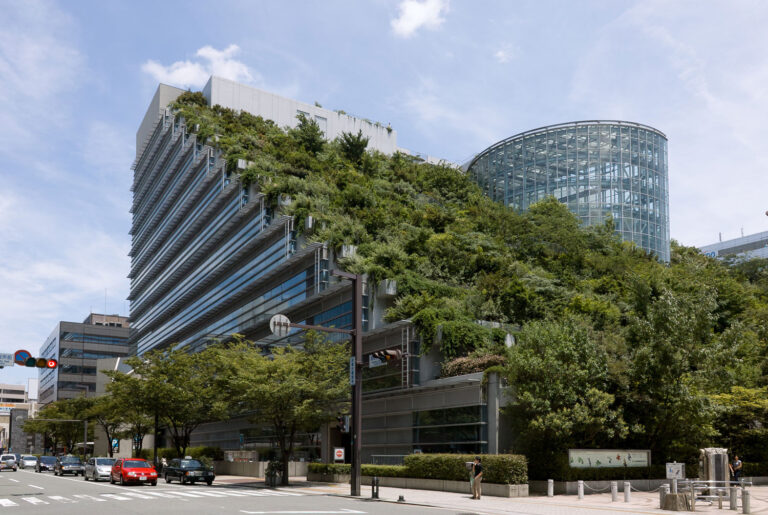
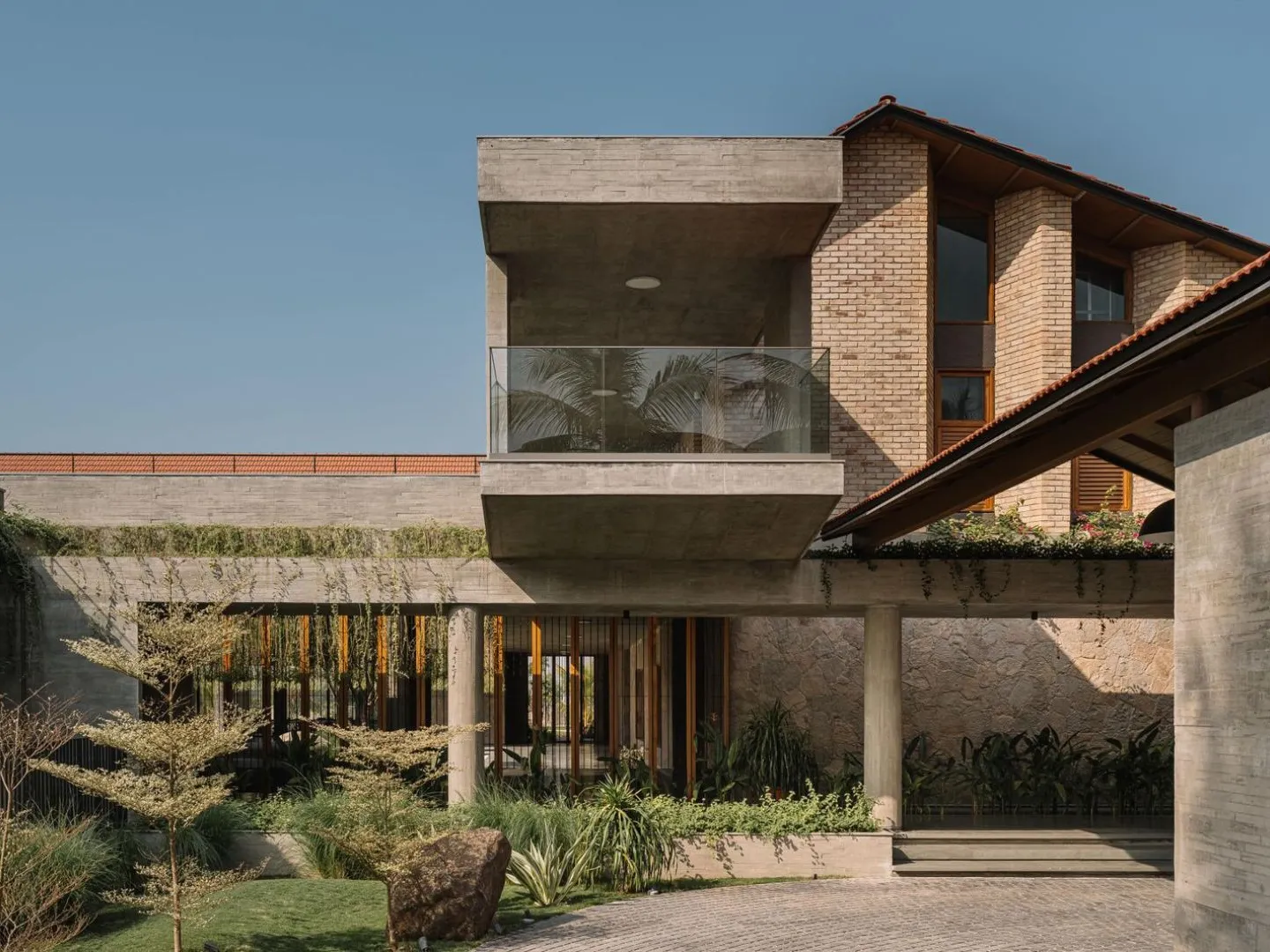
A building’s facade is its first greeting to the world — a handshake in brick and glass, a smile in stucco and wood. You’ll love how thoughtful facade architecture can transform a simple structure into a story waiting to be read. Picture a white house with blue shutters, pink flowers tumbling from window boxes, and the warm glow of evening lamps spilling onto a stone path. That’s not just a home; it’s an invitation.
These facade architecture inspirations span modern glass boxes, Tuscan villas, and tropical retreats. From apartment balconies draped in greenery to grand arched windows that catch the sunset, each image celebrates the dance between built form and the natural world. Step outside and look at your own walls with fresh eyes — because every facade has the potential to sing like a meadow in spring.
1. Tuscan Blush – A Stone Entrance Framed by Pink Flowers
Unfurl this charming Tuscan-inspired facade where a rustic wooden door is flanked by overflowing pots of pink geraniums against a warm stone wall. Facade architecture at its most inviting uses nature to soften hard edges — the pink blossoms echo the sunset tones of the stone. You’ll love how the green shutters add a cooling counterpoint.
Every facade architecture element here works in harmony: the arched doorway, the textured plaster, the climbing rose that seems to have chosen its own path. It’s a reminder that the best facades don’t fight their surroundings — they become part of the garden, as natural as a canyon wall draped in wildflowers.
2. Modern Monolith – Clean Lines and Dramatic Shadows
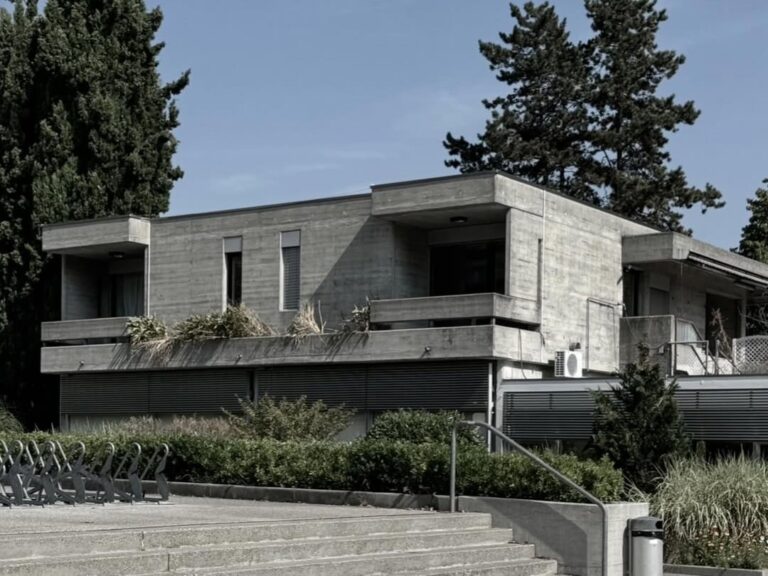
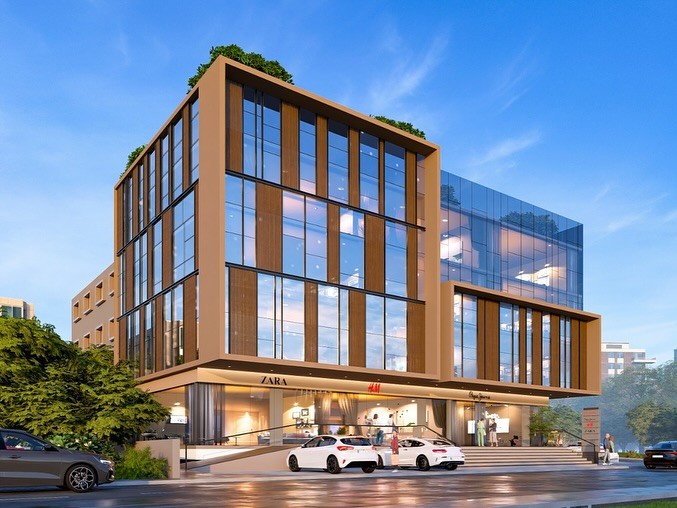
Step into the sharp shadows of this contemporary facade where concrete, glass, and wood intersect in geometric poetry. Facade architecture in the modern idiom plays with light and shadow as much as with materials — the overhangs create dark niches, the windows reflect the sky. You’ll appreciate how the warm wood slats soften the cool concrete.
This facade architecture style is for those who find beauty in restraint. There are no shutters, no flower boxes — just the honest expression of structure and material. Yet it breathes like a forest through its careful proportions and the way morning light moves across its planes. Minimalism, when done right, feels full of life.
3. Tropical Rhythm – Palm Trees Dancing Before a Stone Facade
Feel the breeze rustle through the palm fronds that frame this low-slung stone house, its facade a warm blend of local rock and deep eaves. Facade architecture in tropical climates embraces shade and airflow — the overhanging roof protects the walls, while the tall palms create a vertical rhythm. You’ll love how the stone seems to glow in the late afternoon.
This facade architecture proves that context is everything. The house doesn’t compete with the palms; it nestles among them. The stone echoes the earth, the wide windows invite the breeze, and the whole composition feels like it grew there, as natural as a limestone cliff shaded by trees.
4. Twilight Geometry – A Modern House Lit from Within
Watch as evening falls on this sleek modern house, its large windows glowing like warm lanterns against the deepening blue sky. Facade architecture transforms at dusk — the same walls that reflected sunlight now emit a cozy amber light. You’ll appreciate how the dark trim recedes, letting the lit windows become the stars of the composition.
This facade architecture moment reminds us that a house has two faces: one for day and one for night. The clean lines and simple palette allow the interior life to shine outward, making the building feel alive. It’s a home that doesn’t just sit on its lot — it participates in the evening, welcoming the night with open, glowing eyes.
5. Sunlit Sanctuary – A White House Nearly Hidden by Greenery
Peer through the lush foliage to find the white walls of this expansive house, its many windows winking between leaves. Facade architecture becomes a treasure hunt when plants are allowed to grow freely — the building is revealed in glimpses, not all at once. You’ll love how the white facade provides a bright backdrop that makes every green leaf more vivid.
This facade architecture approach is for the patient gardener. The house doesn’t dominate the landscape; it shares it. The windows are placed to frame specific views of the garden, and the white stucco reflects dappled light. Walk up the path, and the facade reveals itself slowly, like a story told in chapters.
6. Glass Curtain – A White House with Walls of Windows
Stand back to take in the full effect of this white house whose front facade is more glass than wall — a shimmering curtain that reflects clouds and trees. Facade architecture pushes boundaries here, blurring the line between inside and out. You’ll appreciate how the white framing members create a rhythm, like the bars of a musical score.
This facade architecture statement is not for the shy. The house exposes its interior life to the street, a gesture of openness and trust. At night, it becomes a glowing box of light. During the day, it mirrors the sky. It’s a building that disappears into its environment, even as it claims its space.
7. Arched Elegance – Modern Lines Meet Old-World Arches
Trace the graceful curve of the arched windows set into this otherwise modern facade, their shape echoed by the wooden doors below. Facade architecture loves a hybrid — the arches bring warmth and history, while the clean stucco walls keep the look fresh. You’ll love how the wood grain adds organic texture.
This facade architecture style proves that tradition and modernity can coexist beautifully. The arches reference ancient architecture, but the simplicity of the surrounding walls keeps the building from feeling dated. It’s a facade that has one foot in the past and one in the present — a bridge across centuries, held up by good design.
8. Garage as Feature – Two Brown Doors Grounding a Two-Story Facade
Notice how the two wide brown garage doors on this two-story house don’t hide — they anchor the facade, their warm wood tone repeating in the window trim above. Facade architecture often struggles with garage doors, but here they become a design feature. You’ll appreciate how the upper windows balance the wide doors below.
This facade architecture solution is both practical and beautiful. The garage doors are given the same material consideration as the front door. The eye moves easily from the ground level up to the second-story windows, and the whole facade feels cohesive. It’s a lesson in making the necessary beautiful.
9. Coastal Whimsy – Blue Shutters and Potted Plants on White
Sigh with delight at this white house with sky-blue shutters, each window flanked by a pot of cheerful pink or white blooms. Facade architecture at its most approachable uses color and plants to create instant warmth. You’ll love how the blue echoes the sky on a clear day, while the white walls reflect the sun.
This facade architecture style is pure joy. The blue shutters could feel like a cliché, but here they’re perfectly scaled and paired with lush plantings. The white walls keep everything bright, and the overall effect is a house that looks like it’s smiling. It’s the architectural equivalent of a friendly wave from a neighbor.
10. Vertical Garden – An Apartment Building Wrapped in Green
Look up at this apartment building where every balcony is a small garden, trailing vines and flowering plants softening the concrete structure. Facade architecture for multi-family housing becomes a collective project — each resident adds their green touch. You’ll appreciate how the greenery creates a sense of life and community.
This facade architecture model is the future of urban living. The building doesn’t need to be covered in expensive materials; the plants are the decoration. The balconies provide outdoor space for each unit while creating a living, breathing facade that changes with the seasons. It’s a building that breathes, literally and figuratively.
11. Brick & Wood – A White Brick House with a Warm Wooden Door
Admire the combination of white brick and rich wood on this house’s facade — the door and its surrounding trim create a warm focal point against the cool, textured wall. Facade architecture loves material contrast, and here it’s perfectly balanced. You’ll love how the white brick’s roughness plays against the wood’s smooth grain.
This facade architecture pairing is a classic for a reason. White brick offers texture without heaviness, and wood brings warmth without darkness. Add a simple porch light and a small planter, and you have a facade that’s welcoming without being fussy. It’s the architectural equivalent of a firm handshake and a kind smile.
12. Indoor-Outdoor Flow – A Modern House with Floor-to-Ceiling Glass
Imagine living behind this modern facade where enormous windows erase the boundary between inside and out, and potted plants line the glass like a green frieze. Facade architecture at its most ambitious makes the wall nearly disappear. You’ll appreciate how the plants soften the hard lines of the architecture.
This facade architecture style is for those who want their home to feel like a pavilion in a garden. The glass walls reflect the surrounding landscape, and the plants inside and out mingle. From the street, you see a composition of reflection, greenery, and the occasional glimpse of life inside — a living diorama.
13. Monochrome Drama – A White House with Black Doors and Windows
Contrast is the name of the game on this large white house, where every door and window is framed in deep black, creating a graphic, almost two-dimensional effect. Facade architecture in black and white has a bold, timeless quality. You’ll love how the dark frames pop against the white stucco, giving the house a crisp, tailored look.
This facade architecture approach is high-contrast and high-impact. The black frames define each opening, creating a rhythm that marches across the facade. The white walls recede, making the windows the main event. It’s a look that works as well on a farmhouse as on a modern villa — proof that some combinations never go out of style.
14. Cottage Charm – Blue Shutters and a Welcoming Porch
Sit a spell on the porch of this white house with blue shutters, where potted ferns and a wooden rocker invite you to slow down. Facade architecture becomes a lifestyle when you add a deep porch — it’s not just a wall; it’s a place to live. You’ll love how the blue of the shutters matches the cushions on the rocking chairs.
This facade architecture style is all about approachability. The house doesn’t stand aloof behind its facade; it reaches out with a porch, with plants, with places to sit. The blue shutters add a cheerful note, and the white walls reflect the afternoon light. It’s a home that says “welcome” before you even knock.
15. Urban Jungle – A Building Embraced by Vines and Window Boxes
Count the windows on this building — there are many, and almost every one has a window box or a climbing vine making its way up the facade. Facade architecture in the city often fights for attention, but here the plants add softness. You’ll appreciate how the greenery softens the hard edges of the masonry.
This facade architecture is a love letter to urban gardening. The building itself is simple, even plain, but the plants transform it. Each window becomes a small ecosystem, and the collective effect is a facade that feels alive, that breathes, that changes with the seasons. It’s a reminder that nature will always find a way to reclaim our structures.
16. Rhythmic Balconies – A Facade of Repetition and Shadow
Observe the rhythm of this apartment building’s facade — identical balconies stacked in a grid, each casting a dark shadow below. Facade architecture for housing often relies on repetition, and here it’s done with grace. You’ll love how the balconies create a three-dimensional texture across the flat wall.
This facade architecture pattern is both functional and beautiful. The balconies provide outdoor space for each unit, and their shadows create a pattern that changes throughout the day. The building becomes a kind of sundial, marking time with the movement of light across its many ledges. It’s a facade that has a pulse.
17. Ornate Layers – A Facade Rich with Detail and Depth
Get lost in the intricate details of this building’s facade — layered balconies, ornate railings, and windows of varying shapes and sizes. Facade architecture at its most decorative rewards slow looking. You’ll appreciate how the shadows caught in the deep recesses add mystery.
This facade architecture style is for those who believe that a building should be a piece of art. Every cornice, every bracket, every iron railing is an opportunity for expression. The facade doesn’t just enclose space; it tells a story of craftsmanship and ambition. It’s a building that demands to be looked at, and it rewards the gaze.
18. Hanging Gardens – An Apartment House with Cascading Greenery
Look up and see the vines tumbling over the edges of every balcony in this apartment building, creating a green waterfall down the facade. Facade architecture reaches its most romantic when plants are allowed to cascade freely. You’ll love how the green breaks up the hard lines of the concrete structure.
This facade architecture is a communal project — each resident contributes their plants, and together they create a living wall. The building becomes a vertical garden, home to birds and bees as well as people. It’s a model for sustainable urban living that also happens to be breathtakingly beautiful.
19. Lantern at Dusk – A White House Glowing with Evening Light
Walk toward this large white house as evening falls and the lights within begin to glow, turning each window into a golden rectangle. Facade architecture at night is a different animal — the walls recede, and the windows become the facade. You’ll appreciate how the warm light spills out onto the dark lawn.
This facade architecture moment is one of transition and invitation. The house during the day is a white box with many holes; at night, it’s a lantern. The lights inside tell you that someone is home, that life is happening behind those walls. It’s a facade that communicates warmth and welcome long after the sun has set.
20. Plant-Framed Views – A White House Almost Hidden by Foliage
Part the branches to see the white house behind — a game of peek-a-boo between architecture and nature. Facade architecture becomes a discovery when plants are allowed to grow freely, partially obscuring the building. You’ll love how the white walls provide a bright backdrop that makes every leaf and flower pop.
This facade architecture approach is for the romantic who doesn’t need their house to be fully visible from the street. The plants create mystery, a sense that the building is a secret garden. The white walls reflect the filtered light, and the overall effect is dreamy and soft. It’s a facade that doesn’t shout — it whispers.
21. Tropical Classic – A White House with Palm Trees and a Stone Path
Crunch along the stone path that leads to this white house, its simple facade shaded by the graceful fronds of tall palm trees. Facade architecture in warm climates should always consider shade — the palms cast dappled shadows that move across the white walls. You’ll appreciate how the green of the trees contrasts with the crisp white of the house.
This facade architecture pairing is a classic of tropical and subtropical regions. The white house reflects heat, the palm trees provide shade and a sense of place. The facade itself is simple, almost humble, but the setting makes it special. It’s a reminder that sometimes the best thing a facade can do is step back and let the landscape shine.
22. Mediterranean Warmth – White Stucco with Oversized Terracotta Planters
Run your hand over the smooth white stucco of this Mediterranean-inspired house, its entrance flanked by two enormous terracotta planters overflowing with bright bougainvillea. Facade architecture in this style is all about texture and warmth. You’ll love how the orange-red flowers pop against the white wall.
This facade architecture is a study in contrasts: smooth stucco against rough terracotta, white against magenta, the horizontal line of the roof against the vertical trunks of the plants. It’s a facade that feels ancient and fresh at the same time, as if it could be in a Greek village or a California canyon.
23. Green Grid – An Apartment Building Where Every Balcony is a Planter
Count the balconies on this modern apartment building — they’re arranged in a strict grid, but each one is planted differently, creating a patchwork of green against the neutral facade. Facade architecture becomes a collective art project. You’ll appreciate how the repetition of the grid is softened by the variety of the plants.
This facade architecture model is both highly organized and delightfully organic. The building’s structure provides the bones, but the residents provide the skin. Over time, the plants will grow and change, and the facade will evolve. It’s a building that is never finished, always becoming.
24. Arched Grandeur – A White House with Oversized Arched Windows and Greenery
Step back to take in the full effect of this white house’s grand arched windows — they rise nearly two stories, their curves echoed by the potted topiaries that flank the entrance. Facade architecture at its most formal still benefits from the softening touch of plants. You’ll love how the arches frame the sky and the greenery frames the arches.
This facade architecture is a symphony of curves and columns. The arched windows are the dominant feature, drawing the eye up, while the planters and the door below provide a grounded counterpoint. It’s a facade that feels both monumental and welcoming, like a chapel or a library — a place of quiet grandeur.
🏛️ Stone & Shadow Notes: 5 Gentle Practices for Reading and Designing a Facade
- 🍃 Let Light Be Your Co-Designer: Study how sun and shadow move across your facade at different times of day. Facade architecture is never static — the same wall can look entirely different at dawn, noon, and dusk. Use overhangs, deep set windows, and varied textures to create a facade that changes like a meadow from morning to evening.
- 🪴 Marry Architecture to Plant Life: Whether it’s a single potted tree or ivy climbing the entire wall, every facade architecture benefits from a botanical companion. Plants soften hard edges, add living color, and connect your building to the natural world. Choose species that suit your climate and your facade’s orientation — a south-facing wall needs sun-lovers, a north wall wants shade-tolerant ferns.
- 🚪 Honor the Entrance: The front door and its immediate surroundings are the most important part of your facade architecture — it’s where the house greets the world. Give it weight: a distinctive color, a unique material, a generous stoop. Frame it with lighting and planters. The entrance should feel like a destination, even if you’re just coming home from the grocery store.
- 🕯️ Design for Night as Much as Day: A facade that looks beautiful in sunlight can become a dark void after dusk. Plan your facade architecture with layered lighting: uplights to graze textured walls, downlights to illuminate paths, and warm interior lights spilling through windows. At night, your home becomes a lantern — make sure the glow is intentional and inviting.
- 🏺 Embrace Patina and Change: A new facade is a beginning, not an end. Weather will stain, plants will grow, paint will fade. Allow your facade architecture to age gracefully, choosing materials that improve with time — wood that silvers, brick that mosses, copper that patinas. A building that looks like it’s been loved for decades is often more beautiful than one that’s still brand new.
Frequently Asked Questions
Q: What are the most important elements of good facade architecture?
Ans: Proportion, material, and context. A successful facade architecture first respects its setting — a beach house shouldn’t look like a mountain chalet. Then it uses materials honestly (brick that looks like brick, stucco that looks like stucco) and arranges windows, doors, and details in a balanced, rhythmic composition. Finally, the best facades include a human scale: porches, planters, or benches that invite interaction. Think of your facade as a face — the proportions should be pleasing, the expression should be warm, and the details should feel intentional, not random.
Q: How can I make my home’s facade more welcoming on a budget?
Ans: Start with paint and plants — they’re the most affordable and impactful changes. Paint your front door a cheerful color, add window boxes with seasonal flowers, and ensure your house numbers are visible and attractive. For facade architecture on a budget, also clean your gutters and windows, repair any cracked walkways, and add a simple porch light. A well-maintained, clean facade is always welcoming, regardless of style. Then add a bench or a pair of rockers if you have a porch — seating immediately says “stay awhile.”
Q: What’s the difference between facade architecture and just the front of a building?
Ans: A facade is the entire face of a building, but facade architecture implies intention — it’s designed, not accidental. The term often refers to the principal, street-facing side, but it can also apply to any side that’s meant to be seen. Good facade architecture considers proportion, rhythm, materiality, and how the building meets the ground and the sky. It’s not just a wall with holes cut in it; it’s a composition that tells a story. The back of a building, even if plain, is still a facade — but it’s usually the front that gets the architectural attention.
Q: How do I choose the right color for my home’s facade?
Ans: Look at your roof, your landscaping, and your neighbors’ houses. For facade architecture, the best colors are those that harmonize with the environment. White, cream, and light gray are timeless and work in almost any setting. If you want color, consider a deep green, navy, or terracotta — but use them on doors or shutters, not the whole wall. Test paint samples on a large piece of foam board and lean it against your house for a few days. Watch how the color changes in different lights. The right color should feel like it belongs there, as natural as the sky above it.
Q: Can I mix different architectural styles on one facade?
Ans: Yes, but carefully. Eclectic facade architecture can be charming, but it’s easy to cross into chaos. Choose one dominant style (say, Craftsman or Mid-Century Modern) and add small touches from another. For example, a modern farmhouse might have a traditional front door but clean, minimalist windows. The key is consistency of scale and material — all your wood should feel related, all your hardware should share a finish. Think of it as a family reunion: everyone can have their own personality, but they should look like they belong to the same family. When in doubt, hire a designer or an architect — mixing styles well is harder than it looks.
Conclusion
You’ve walked through a world of facade architecture — from Tuscan doors framed in pink flowers to sleek modern boxes of glass and concrete, from apartment balconies draped in ivy to white stucco houses with blue shutters. Each facade told a different story, but all shared a common thread: they were designed with intention, with care, and with a sense of how they would live in their environment. A facade is not just a wall; it’s a promise. It says something about the people inside and the world they want to create around themselves.
Now it’s your turn to look at your own walls with fresh eyes. Grab a notebook and stand across the street. What does your facade say? What would you like it to say? Then start small — paint the door, add a planter, clean the windows, install a new light. Your home’s facade architecture is a conversation between you and the street, and every small change adds a new sentence. Step outside, take a deep breath, and begin. 🏛️