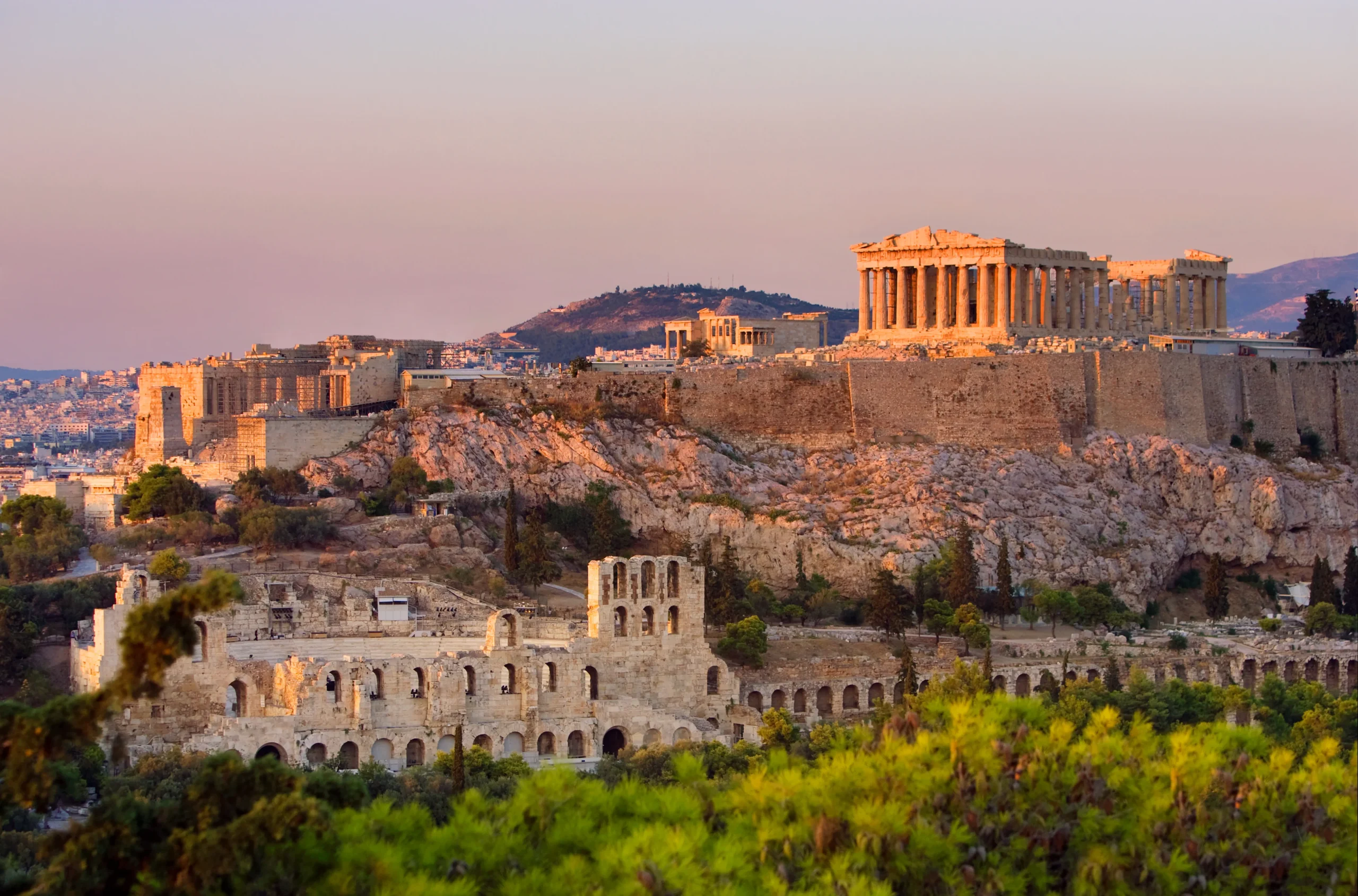
Ancient Greek architecture stands as one of humanity’s greatest achievements in stone, where every column, pediment, and frieze tells a story of harmony, proportion, and divine aspiration. From the majestic Parthenon crowning the Acropolis to the elegant temples scattered across the Mediterranean, these structures embody ideals of balance and beauty that continue to inspire modern design. Temples built to honor gods became models of perfection, their Doric, Ionic, and Corinthian orders defining elegance for millennia. Imagine standing before marble columns that have weathered centuries, feeling the same awe that pilgrims felt thousands of years ago, where mathematics met mythology in perfect harmony.
Marble Whispers from Sacred Hills
As dawn light touches the Acropolis like golden fingers tracing ancient stone, Greek architecture reveals its eternal grace, where human ingenuity meets divine order. These timeless elements draw from the land’s own purity, offering ways to understand the profound simplicity that made marble sing.
- Doric Strength: Solid, fluted columns without bases rise like steadfast oak trunks from sacred ground, their plain capitals supporting the weight of pediments as mountains bear the sky.
- Ionic Grace: Slender volutes curl like seashells washed ashore, adding delicate elegance to temple façades that sway gently in the mind’s eye like olive branches in breeze.
- Corinthian Flourish: Acanthus leaves unfurl in lavish detail, transforming capitals into living gardens carved in stone, where nature’s wild beauty meets architectural restraint.
- Entasis Refinement: Columns swell subtly at the center, countering optical illusion so they appear perfectly straight, a quiet correction that reveals the Greeks’ mastery of perception.
- Pediment Sculpture: Triangular gables hold frozen myths—gods in battle, heroes in triumph—telling epic tales high above worshippers like clouds narrating storms.
- Frieze Narratives: Continuous bands of reliefs march around cella walls, depicting processions and rituals that seem to move with the sun across marble horizons.
- Optical Corrections: Curved stylobates and inclined columns create the illusion of perfect flatness, bending stone to serve the human eye like a river bends to landscape.
- Propylaea Gateway: Monumental entrances frame sacred precincts, their asymmetry guiding pilgrims forward like canyon passages leading to hidden valleys of revelation.
- Golden Ratio Harmony: Proportions follow divine mathematics, every measurement resonating like strings of a lyre tuned to cosmic order.
Sunlit Paths to Marble Sanctuaries
Like sunlight tracing ancient trails across Attic hills, understanding Greek architecture unfolds step by step, revealing layers of intention beneath apparent simplicity. Follow this luminous journey to grasp how stone became eternal expression of human aspiration.
- Begin at the sacred site, choosing elevated ground where temples could commune with sky and sea like eagles claiming high perches.
- Select marble from nearby quarries—Pentelic white or island blue-gray—letting the land itself provide material that glows under Attic sun.
- Establish the sacred perimeter with stylobate and crepidoma steps, raising the temple above profane ground like a stage for divine drama.
- Raise columns in chosen order—Doric for strength, Ionic for grace, Corinthian for richness—each shaft fluted to catch shifting light like water over stone.
- Construct the cella, the inner sanctuary housing the god’s statue, its walls plain so focus remains on the divine presence within.
- Crown with entablature—architrave, frieze, cornice—where sculpture finds its place, telling myths to mortals below like sky writing messages in clouds.
- Add pediments filled with dynamic figures, their forms seeming to step forward from stone as if myths themselves were awakening.
- Finish with paint and gilding—once vibrant blues, reds, golds—that time has washed away, leaving pure marble to speak in today’s quiet language.
The enduring power of ancient Greek architecture lies in its pursuit of ideal beauty through rigorous geometry and profound symbolism. Temples were not mere buildings but embodiments of cosmic order, where every proportion reflected philosophical ideals and every detail honored the gods. Even in ruin, they command reverence, their broken columns standing as testaments to humanity’s capacity for transcendent creation. These structures remind us that true luxury is not in ornament but in the perfect alignment of form, function, and meaning—lessons that echo through centuries, still shaping our understanding of what makes a space sacred.
1. Parthenon Columns at Golden Hour
Stand before these majestic Doric columns bathed in evening light, you’ll feel the weight of history in every fluted shaft rising like ancient sentinels against Attic sky. The warm glow reveals subtle entasis curves that make marble seem alive, breathing with centuries of quiet strength. This ancient Greek architecture captures the essence of restrained power that still commands awe.
Let this vision inspire your appreciation of proportion and light, where simple stone achieves timeless majesty through perfect geometry and patient craftsmanship.
2. Trevi Fountain in Baroque Splendor
Watch water cascade over dramatic figures in this later tribute to classical ideals, you’ll sense how Greek proportions influenced the grandeur that followed. Neptune commands the scene with godlike authority, his chariot surging forward like myths carved into living stone. The composition echoes Greek temple pediments in its theatrical energy.
Recognize the enduring Greek legacy here, where balanced asymmetry and mythological narrative continue to captivate hearts across millennia.
3. Ancient Roman Temple with Corinthian Capitals
Admire these richly carved Corinthian capitals unfurling acanthus leaves like stone gardens, you’ll appreciate how Romans adapted Greek elegance with lavish detail. The columns stand proud against blue sky, their height emphasizing vertical aspiration that echoes sacred Greek precincts. This fusion creates spaces that feel both majestic and inviting.
Trace the evolution from Greek restraint to Roman opulence, where each leaf tells a story of cultural dialogue across centuries.
4. Ruined Temple Amid Olive Groves
Walk among fallen columns embraced by ancient olive trees, you’ll sense the timeless dialogue between human creation and nature’s enduring presence. Broken marble contrasts with silver-green leaves, reminding us that even in ruin, Greek architecture speaks of harmony with landscape. The scattered stones maintain their dignity under open sky.
Feel the quiet poetry here, where time has softened edges but not the profound sense of order that once governed every measurement.
5. Acropolis Parthenon Against Blue Sky
Gaze up at the Parthenon silhouetted against endless blue, you’ll understand why this temple remains the pinnacle of ancient Greek architecture. Perfect proportions float above the city, their golden ratio creating visual harmony that feels almost supernatural. The marble glows with inner light, defying centuries.
Stand in this presence, and feel how geometry can transcend stone, becoming a bridge between mortal craft and divine ideal.
Similar Posts
- Modern Magnets of Community: Inspiring Shopping Center Architecture Ideas for Vibrant Hubs

- Timeless Splendor of India: Majestic Indian Architecture Ideas for Inspired Living

- Timeless Whispers of Stone: Enchanting Old Architecture Ideas to Inspire Enduring Beauty
- Miniature Worlds of Wonder: Captivating Architecture Model Ideas for Creative Minds

- Green Harmony in Design: Inspiring Sustainable Architecture Ideas for a Balanced Future
- Serenity in Simplicity: Timeless Japanese Architecture Ideas for Peaceful Living

6. Classical Orders Illustrated
Study these precise renderings of Doric, Ionic, and Corinthian orders side by side, you’ll grasp the evolution of Greek architectural vocabulary. Each capital tells its own story—strength, grace, abundance—while maintaining perfect proportion. The diagrams reveal the mathematical beauty hidden in every curve.
Use this clarity to deepen your appreciation of how small refinements create monumental impact in ancient Greek architecture.
7. Modern Interpretation of Greek Temple
Discover contemporary designs inspired by classical forms, you’ll see how Greek principles of symmetry and proportion remain relevant today. Clean lines and marble evoke ancient temples while embracing modern simplicity. These spaces feel both timeless and forward-looking.
Recognize the living legacy here, where ancient Greek architecture continues to shape our understanding of beauty and harmony.
8. Weathered Marble Detail Close-Up
Examine the delicate veining and subtle weathering on ancient marble, you’ll marvel at how time has only enhanced the stone’s beauty. Each crack and patina tells stories of centuries under sun and rain. The surface glows with inner luminosity that modern materials struggle to replicate.
Touch this enduring material in imagination, and understand why the Greeks chose marble as worthy vessel for divine presence.
9. Propylaea Gateway on the Acropolis
Approach the monumental gateway that welcomes pilgrims to the sacred Acropolis, you’ll feel the deliberate asymmetry guiding movement forward. Columns frame distant views like natural portals, creating a sense of transition from profane to sacred. The architecture choreographs experience.
Walk this path in mind, and sense how Greek architects designed not just buildings but journeys of revelation.
10. Italian Villa Inspired by Classical Forms
Stroll through gardens where classical columns frame Renaissance elegance, you’ll see the unbroken thread connecting Greek origins to later revivals. Symmetrical plantings and marble accents echo temple precincts in domestic scale. The space feels both grand and intimate.
Appreciate how ancient Greek architecture became the universal language of beauty across cultures and centuries.
11. Neoclassical Interior with Greek Motifs
Enter rooms adorned with Greek key patterns and Ionic motifs, you’ll recognize how classical elements create timeless domestic luxury. Plasterwork and columns bring temple grandeur indoors without overwhelming scale. Light plays across white surfaces like sunlight in marble quarries.
Bring these motifs home, and infuse everyday spaces with echoes of ancient harmony and proportion.
12. Temple Ruins at Sunset
Watch the last light kiss broken columns turning them rose-gold, you’ll witness how ruins gain new beauty in golden hour. The fallen stones maintain dignity, their geometry still perfect despite time’s erosion. Silence amplifies the architecture’s presence.
Stand in this fading light, and feel the quiet power that survives when everything else has crumbled.
13. Pure Greek Aesthetic Composition
Absorb this distilled vision of white marble against blue sky, you’ll understand why Greek architecture became synonymous with ideal beauty. Clean lines, perfect proportions, and luminous stone create visual poetry that requires no ornament. The simplicity is profound.
Embrace this purity, and see how restraint can achieve the highest form of elegance.
Latest Posts
- Wabi Sabi Living Room Interior Ideas for a Calm, Peaceful Home

- Kitchen Interior Design in India: Blending Tradition with Modern Style
- Modern Magnets of Community: Inspiring Shopping Center Architecture Ideas for Vibrant Hubs
- Timeless Splendor of India: Majestic Indian Architecture Ideas for Inspired Living
- Commercial Office Interior Design Ideas for Professional Spaces

- Timeless Whispers of Stone: Enchanting Old Architecture Ideas to Inspire Enduring Beauty
14. Detailed Greek Key Pattern Close-Up
Trace the continuous meander pattern that borders countless Greek temples, you’ll appreciate its mathematical precision and symbolic meaning. The design flows endlessly like life’s journey, turning borders into philosophical statements. Its simplicity belies deep sophistication.
Incorporate this motif, and add layers of meaning to modern spaces through ancient wisdom.
15. Tattoo Design Inspired by Greek Architecture
Admire how ancient motifs translate to skin, you’ll see the enduring appeal of Greek forms in contemporary expression. Columns, acanthus, and geometric patterns carry centuries of meaning into personal narratives. The designs remain timeless across mediums.
Carry these symbols, and wear echoes of classical beauty as living tributes to enduring ideals.
16. Ruins of Ephesus Library Facade
Face the reconstructed Celsus Library with its elaborate facade, you’ll witness Hellenistic grandeur at its peak. Niches for statues, detailed friezes, and Corinthian columns create a theater of knowledge. The architecture celebrates learning as sacred.
Honor this legacy, and remember that Greek-inspired spaces were built to elevate the mind as much as the spirit.
17. Modern Greek-Inspired House Exterior
Discover contemporary homes drawing directly from classical vocabulary, you’ll see white stucco, columns, and pediments reinterpreted for modern living. The designs maintain harmony with landscape while offering comfort. Ancient principles prove eternally adaptable.
Build with these echoes, and create homes that bridge millennia through shared ideals of beauty.
18. Ancient Temple Reconstruction Rendering
Visualize a fully restored temple gleaming under clear sky, you’ll understand the original vibrancy lost to time. Bright paint, gold accents, and complete sculpture reveal how colorful these monuments once were. The reconstruction breathes life into silent ruins.
Imagine walking among them as ancients did, surrounded by color and myth made manifest in marble.
19. Ionic Column Detail
Study the elegant volutes and refined fluting of an Ionic capital, you’ll appreciate the subtle sophistication that distinguishes this order. The design feels lighter, more graceful, like poetry compared to Doric prose. Every curve serves both beauty and structure.
Celebrate this refinement, and recognize how small details create lasting impressions of grace.
20. Ionic Capital Close-Up
Examine the spiral volutes that give Ionic capitals their distinctive character, you’ll see how they evoke seashells and natural forms. The carving demonstrates extraordinary skill, turning stone into delicate movement. This detail elevates entire structures.
Appreciate this artistry, and understand why the Greeks saw beauty in nature’s patterns translated to architecture.
21. Ancient Temple Ruins at Dusk
Watch twilight settle over solitary columns, you’ll feel the melancholy beauty of ruins that still command respect. The fading light softens broken edges, revealing geometry that time cannot erase. Silence amplifies their presence.
Linger in this moment, and sense the quiet dignity that survives when empires fall but ideals endure.
22. Beaux-Arts Inspired Greek Revival Interior
Enter grand interiors where Greek orders frame opulent spaces, you’ll see how 19th-century architects revived classical forms for modern grandeur. Coffered ceilings, columns, and entablatures create palatial atmosphere. The style bridges ancient and contemporary.
Experience this revival, and feel the continuous thread connecting classical ideals to later expressions of luxury.
23. Romanticized Greek Temple Landscape
View a dreamy landscape where temples nestle among cypress and olive, you’ll understand the romantic vision that shaped perceptions of ancient Greece. Soft light and gentle ruins create poetic atmosphere. The scene feels like myth made visible.
Dream in this ideal, and carry the romantic essence of classical beauty into your own appreciation of architecture.
Frequently Asked Questions
Q: What are the three main orders of ancient Greek architecture?
Ans: The Doric (sturdy and simple), Ionic (elegant with volutes), and Corinthian (ornate with acanthus leaves) orders defined ancient Greek architecture, each bringing distinct character to temples and public buildings.
Q: Why did Greek temples have no windows?
Ans: Ancient Greek architecture focused on exterior beauty and sacred interiors lit by doorway light, with the cella designed to house cult statues rather than serve as gathering spaces needing natural illumination.
Q: How did the Greeks achieve perfect-looking straight columns?
Ans: Through entasis (subtle swelling) and optical corrections like curved stylobates, ancient Greek architecture created the illusion of perfect straightness that actually accounts for how human eyes perceive lines.
Q: Were Greek temples originally colorful?
Ans: Yes, ancient Greek architecture featured bright paint—reds, blues, golds—on friezes, pediments, and details, making marble structures far more vibrant than the white ruins we see today.
Q: Why is the Parthenon considered the pinnacle of ancient Greek architecture?
Ans: Combining perfect proportions, optical refinements, sculptural programs, and Pentelic marble that glows golden at sunset, the Parthenon represents the highest achievement of ancient Greek architecture in harmony and beauty.
Conclution
As shadows lengthen across marble steps worn smooth by countless pilgrims, ancient Greek architecture continues to speak across millennia of humanity’s deepest aspirations—toward order, beauty, and connection with something greater. These temples, columns, and pediments were never merely buildings; they were philosophical statements carved in stone, embodiments of ideals that still shape our understanding of proportion, harmony, and enduring excellence. From the Acropolis to distant colonies, the Greeks taught us that true greatness lies in balance between strength and grace, simplicity and refinement. You’ve glimpsed their vision—now carry it forward. Start with a single classical book on your shelf, a Greek key pattern in your home, or simply pause to appreciate the columns supporting your own world—let ancient wisdom illuminate the present, one measured proportion at a time.